


Home
TAUSPACE
TAUSPACE
  • Home
Talk to us

Telecoms · Carbon Footprint · MVNO · Sustainability

Driving Sustainability: Innovative Approaches for MVNOs to Slash Carbon Footprint

MVNOs can leverage their operational structure to pioneer innovative carbon reduction methods while achieving cost efficiencies through sustainability initiatives.

Written By
Industry Analyst Team
Publish Date
February 5, 20243 min read
Share

Driving Sustainability: Innovative Approaches for MVNOs to Slash Carbon Footprint

Introduction

As Mobile Virtual Network Operators (MVNOs) continue expanding their market presence, environmental responsibility has gained critical importance. Many telecom companies now provide sustainable energy alternatives to customers. MVNOs can leverage their operational structure to pioneer innovative carbon reduction methods while potentially achieving cost efficiencies.

Key Strategies for Carbon Reduction

Network Infrastructure Optimization
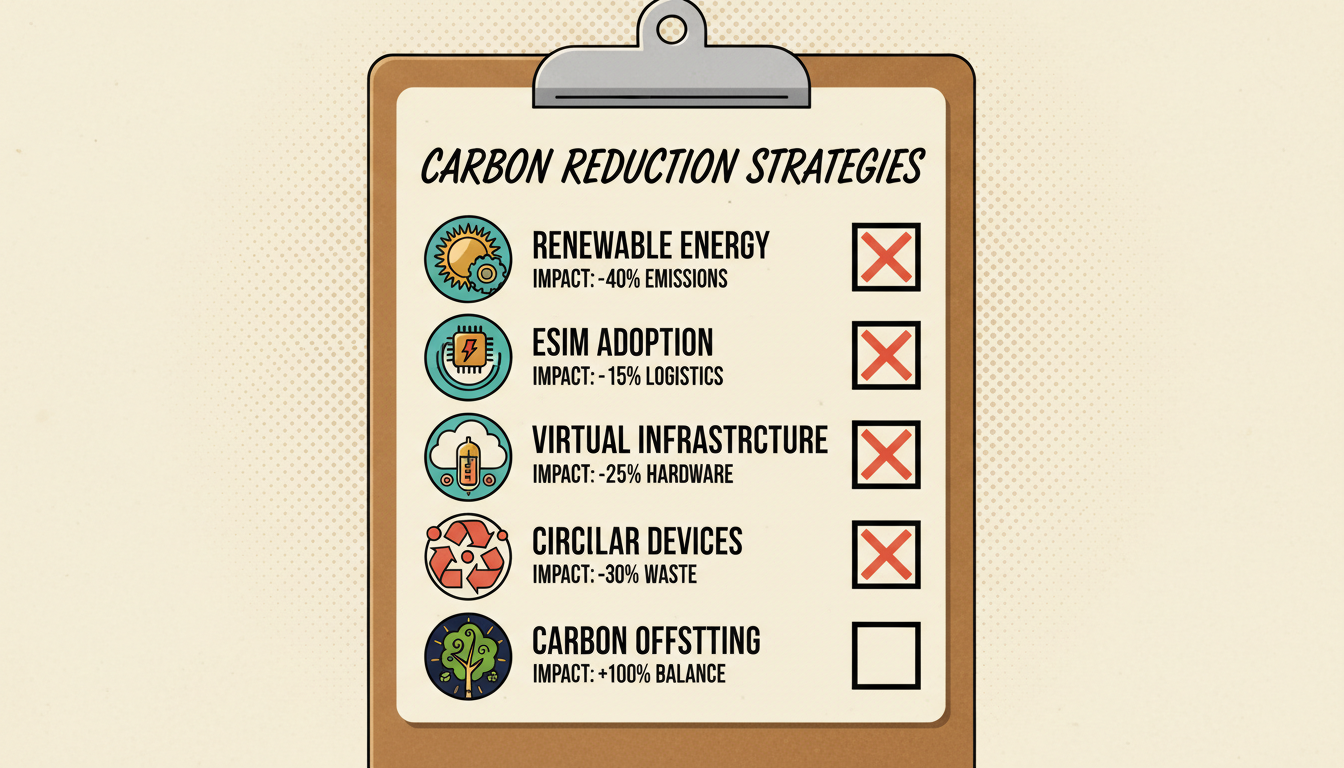
A retro inspector clipboard showing a carbon reduction checklist: Renewable Energy, eSIM Adoption, Virtual Infrastructure, Circular Devices, and Carbon Offsetting, each with impact metrics

MVNOs should collaborate with host network operators to enhance efficiency through advanced analytics and machine learning. Dynamic resource allocation based on demand patterns minimizes energy consumption while maintaining service quality and reducing operational expenses.

Renewable Energy Adoption

The telecommunications sector consumes substantial energy for infrastructure. MVNOs can work with host operators to prioritize renewable sources — solar and wind power — for network operations, demonstrating commitment throughout the value chain.

Energy-Efficient Equipment

Supporting investments in low-consumption technologies and partnering with manufacturers emphasizing green standards strengthens infrastructure sustainability.

Consumer Behavior Influence

MVNOs can encourage users to optimize device settings, update software instead of replacing hardware, and properly recycle devices, reducing electronic waste.

Data Centre Efficiency

Implementing virtualization, optimizing server configurations, and adopting environmental best practices significantly lower energy consumption.

eSIM and Smart SIM Manufacturing

Eliminating physical SIM cards through eSIM technology reduces plastic waste and resource consumption.

Remote Work Practices

Leveraging remote work trends, cloud-based collaboration tools, and minimized physical office space reduces carbon footprints while improving operational flexibility.

End-of-Life Device Management

Establishing take-back programs with manufacturers and recycling partners ensures responsible disposal and minimizes electronic waste impacts.

Green Marketing Communications

Highlighting sustainability efforts through campaigns raises consumer awareness and enhances brand positioning.

Monitoring and Reporting Systems

Robust tracking of carbon footprint and energy metrics enables data-driven improvements and demonstrates transparency.

Conclusion

Sustainability represents both responsibility and business opportunity for MVNOs. Through collaboration with operators, consumer engagement, and technology advocacy, MVNOs can lead industry-wide carbon reduction efforts while ensuring long-term resilience.
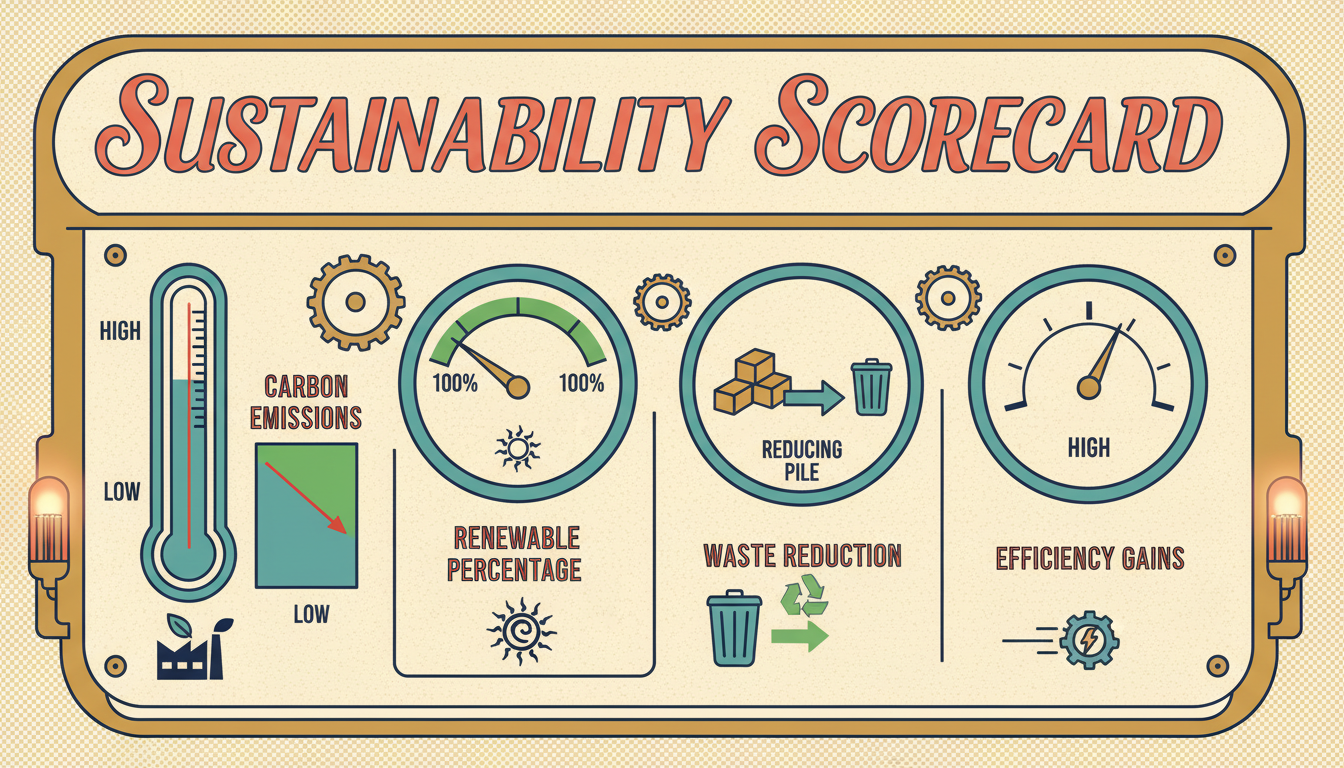

A vintage instrument panel showing sustainability KPI gauges: Carbon Emissions trending down, Renewable Percentage rising, Waste Reduction shrinking, and Efficiency Gains accelerating

Related Articles

5G and a Greener Future: Opportunities and Challenges
Telecoms5G

5G and a Greener Future: Opportunities and Challenges

The rollout of 5G promises unprecedented connectivity but raises critical questions about environmental sustainability and energy consumption.

3 min readRead More
5G and Renewable Energy: Powering a Greener Future
Telecoms5G

5G and Renewable Energy: Powering a Greener Future

5G and renewable energy technologies are converging to revolutionize electricity generation, distribution, and consumption through IoT-enabled smart grids and real-time monitoring.

3 min readRead More
Accelerating Transformation with AI and Green Innovation in Africa
TelecomsCybersecurity

Accelerating Transformation with AI and Green Innovation in Africa

As Africa Industrialisation Week unfolds in Kampala, the focus is on leveraging AI and green practices to drive structural transformation—unlocking sustainable growth, job creation, and stronger environmental stewardship.

3 min readRead More

Ready to discuss your transformation?

Our team has helped operators, banks, and digital brands across four continents navigate complex BSS/OSS challenges. Let's explore how we can help you.

Talk to an ExpertExplore fullCIRCLE NEXT
TAUSPACE

Carrier-grade platforms and advisory for the telecom businesses being built right now.

Phone+27 10 140 6574
Email[email protected]
South African Office1 Montecasino Blvd, The Pivot Block C,
Fourways, South Africa
North American Office16192 Coastal HWY, Lewes, DE 19958,
USA

Platforms

  • fullCIRCLE NEXT
  • Advance.ME
  • 5G charging and policy
  • Digital BSS and commerce
  • Customer value management
  • Modules

Advisory

  • Advisory overview
  • Strategy and business case
  • BSS/OSS migration
  • Bank MVNO advisory
  • Programme assurance

Explore

  • Use cases
  • Experience
  • Clients
  • Insights
  • Contact

TAUSPACE

  • Why TAUSPACE
  • Our story
  • Expertise
  • Partners
  • Careers
PrivacySecurity & data protectionGDPRTerms & conditions
© TAUSPACE. All rights reserved.