
Architecture · Seven modules · One fabric
Seven modules. Clean boundaries. One operating system.
The architecture of governed intelligence.
Most platforms are sold as one thing and operated as several. fullCIRCLE NEXT is the other way around. Seven modules, each with a clear architectural role, connected through a single signed-contract fabric. No module imports another directly. No module shares state.
The result is a system that scales by composition, not by accident.
The operating flow
From edge to enterprise. Every event, every time.
Every commercial event flows through the same modules in the same governed sequence. cortex orchestrates the reasoning. nfinity decides what to do with it. netra holds the gate. orbis keeps the customer. nomia handles the money. axon carries every message between them. nova executes at the edge. The handoffs disappear because there aren’t any. The event moves through one system.
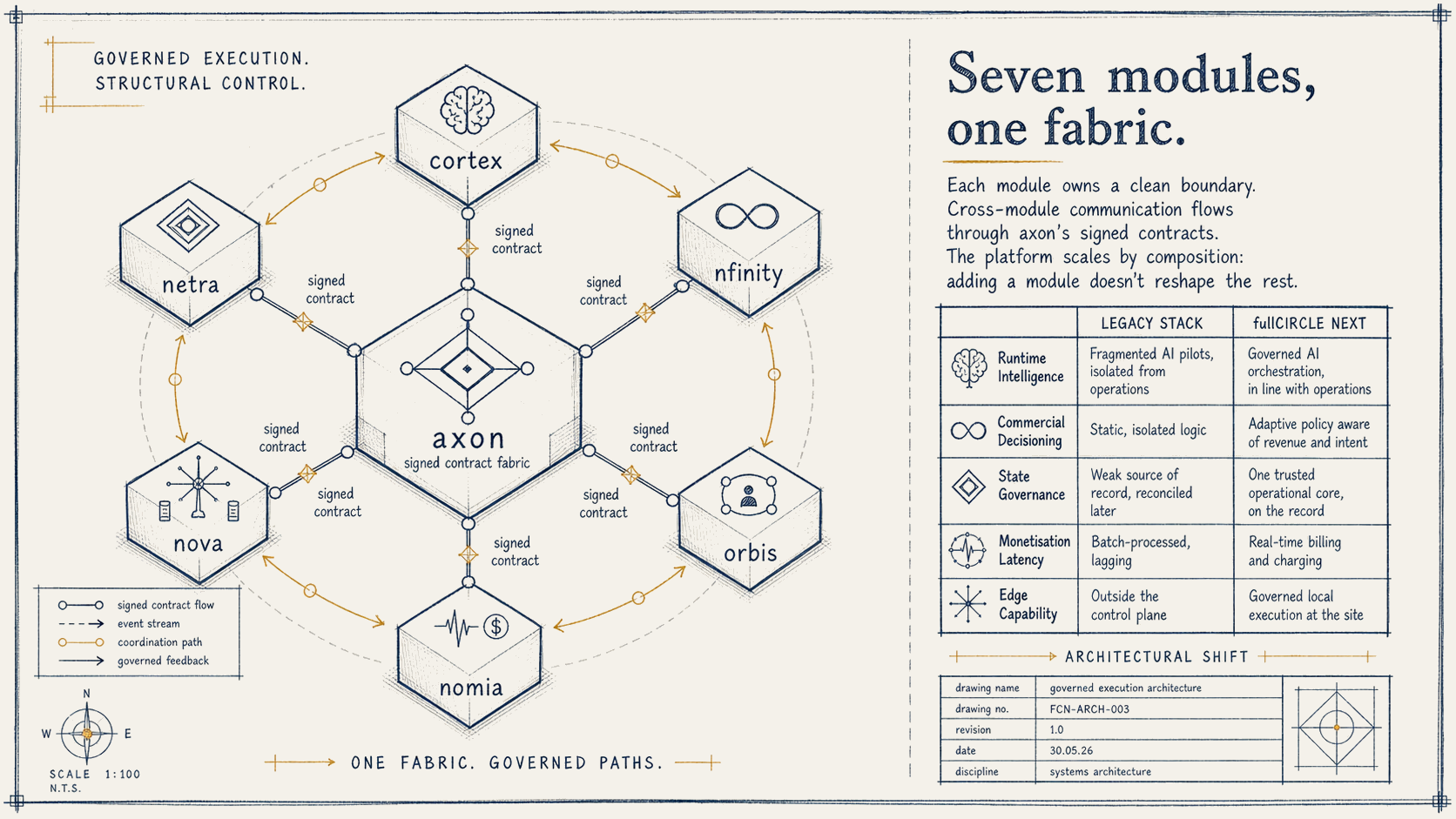
A unified architecture, replacing a fragmented billing and operations stack.
The governance triad
netra decides. cortex reasons. nova executes.
Every mutation crosses a governance boundary. An agent proposes, the run pauses, an operator approves, and only then does it execute at the edge. No autonomous changes without approval.
The seven
Each module is an independent application.
Click any module to open its full architectural brief: what it owns, what it doesn’t, how it composes with the rest of the system, and what’s running in production.
The contract seam
The architecture stops big balls of mud.
The seven modules share no domain logic. They cannot. nomia cannot import code from orbis. cortex cannot reach into netra directly. Every cross-module communication flows through axon contracts: signed, versioned, auditable.
That single architectural decision is what keeps the system composable as it grows. Modules can be scaled independently. Tested independently. Replaced or evolved independently. The contract between them is the public surface; everything else is implementation detail behind a boundary.
It’s not a microservices fashion statement. It’s how you stop a five-year-old platform from turning into the legacy stack it was meant to replace.
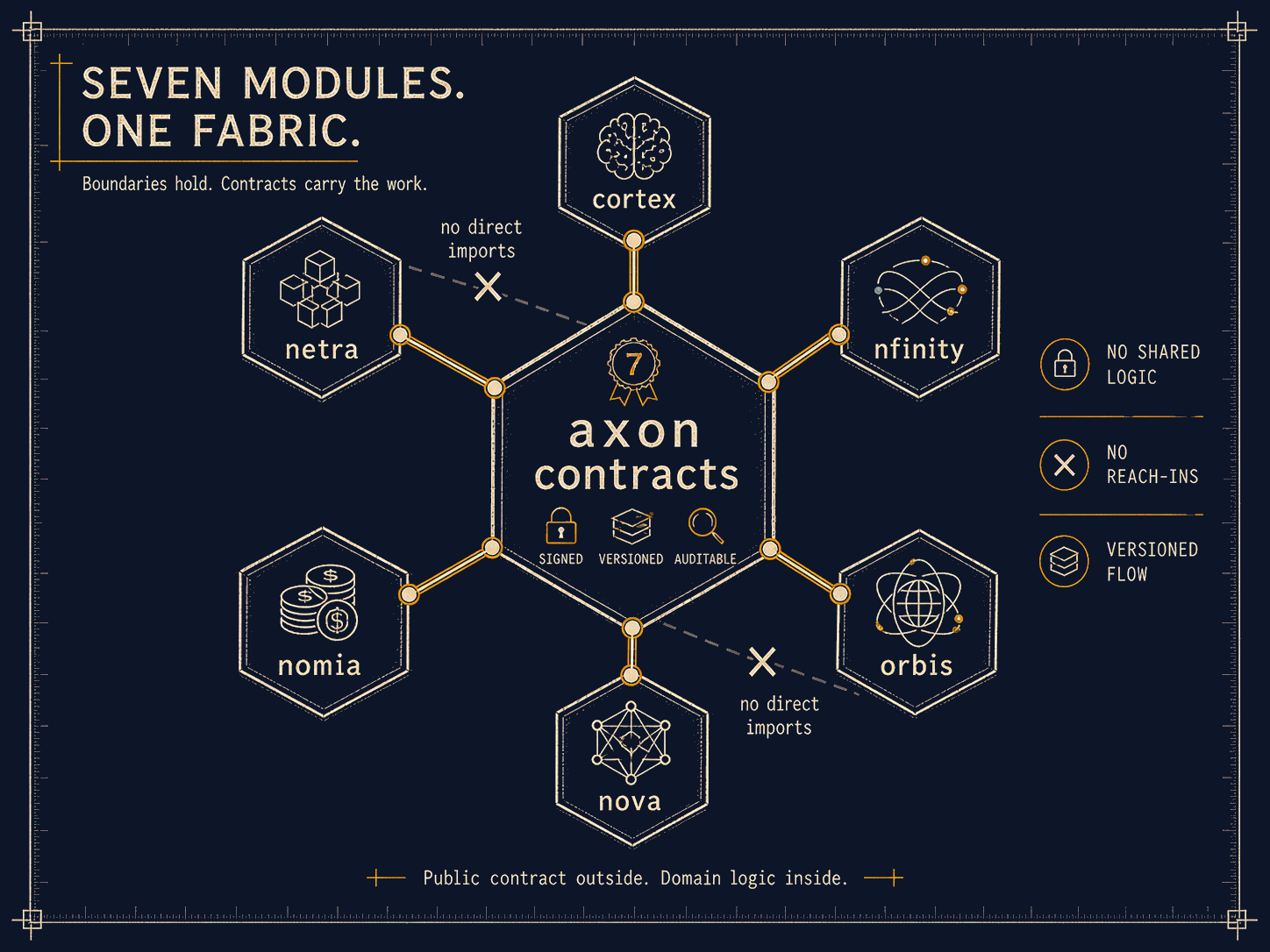
Applications never share domain logic. All cross-app communication flows through axon contracts. Components scale, test, and evolve independently.
Boundary enforcement
Absolute boundaries across data and edge.
fullCIRCLE NEXT was built for operators running multiple business units, wholesale partners, and retail divisions on shared infrastructure. The boundaries between them aren’t a feature added to applications. They’re enforced at the database layer and at the network edge.
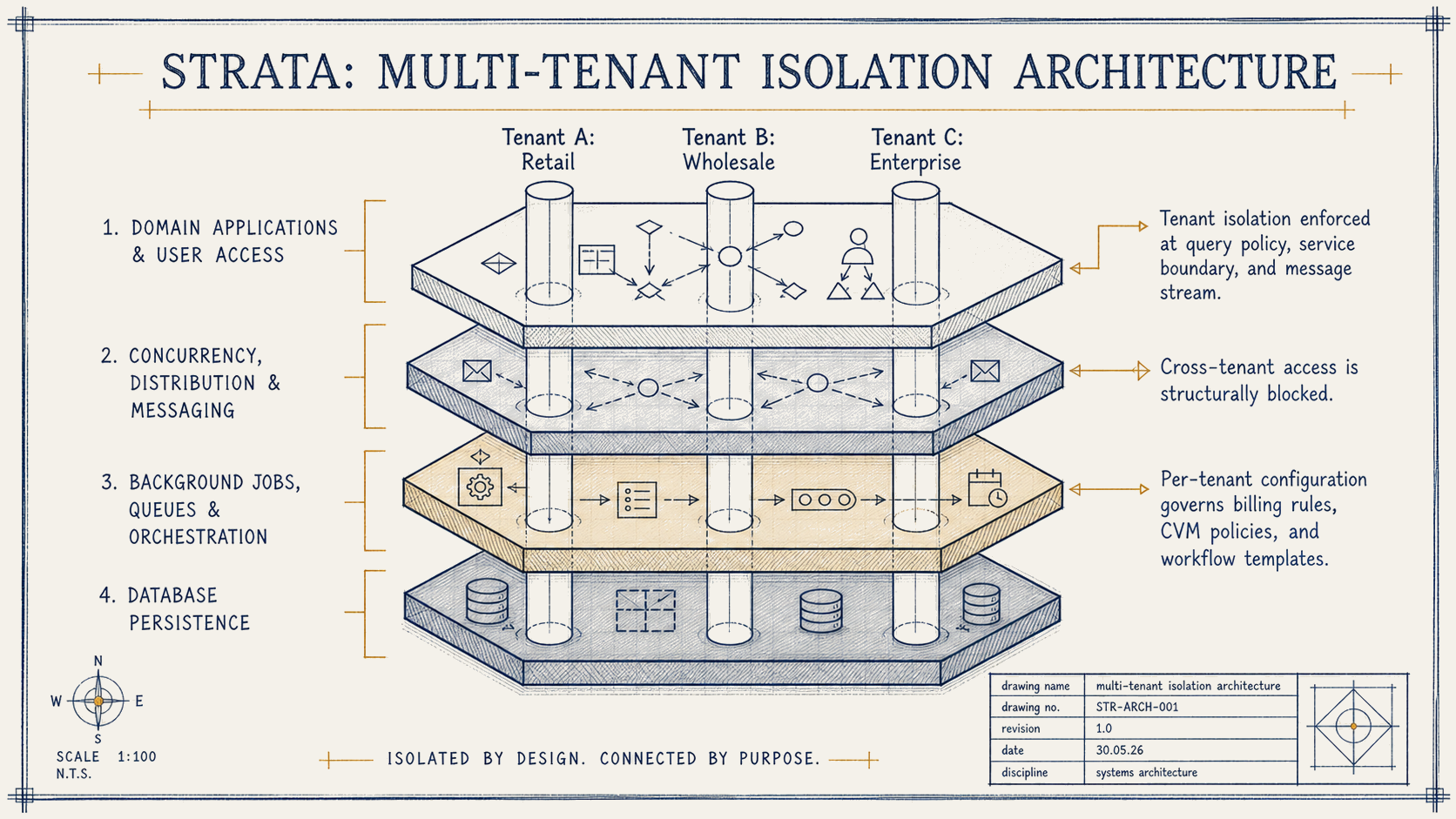
Multi-tenancy isolation at the database layer. Each tenant runs in its own pool. API boundaries enforce separation at the application layer.
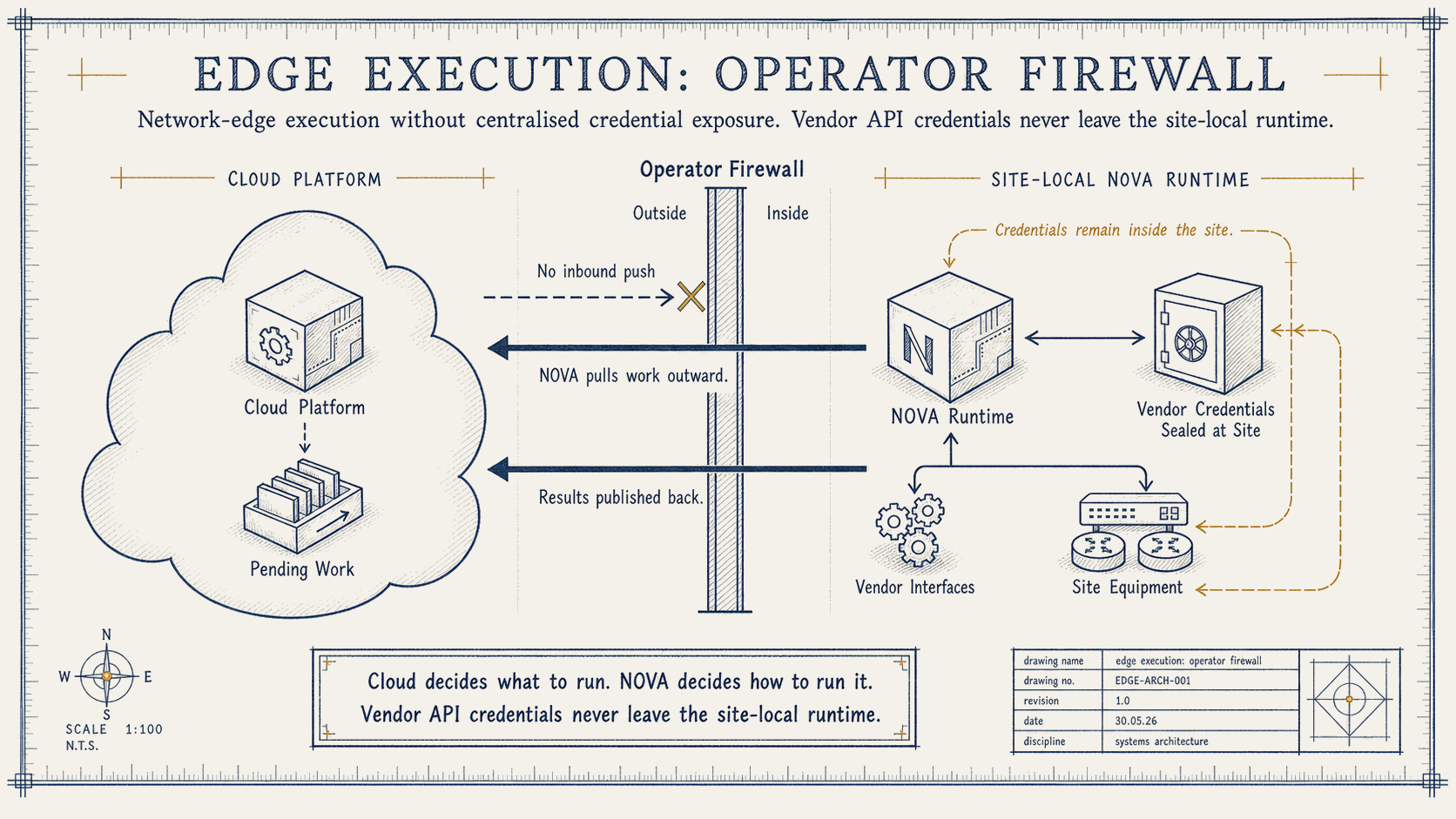
Network-edge execution without centralised credential exposure. Vendor API credentials never leave the site-local runtime.
Tenancy is architecture, not application policy.
Applications run on these modules
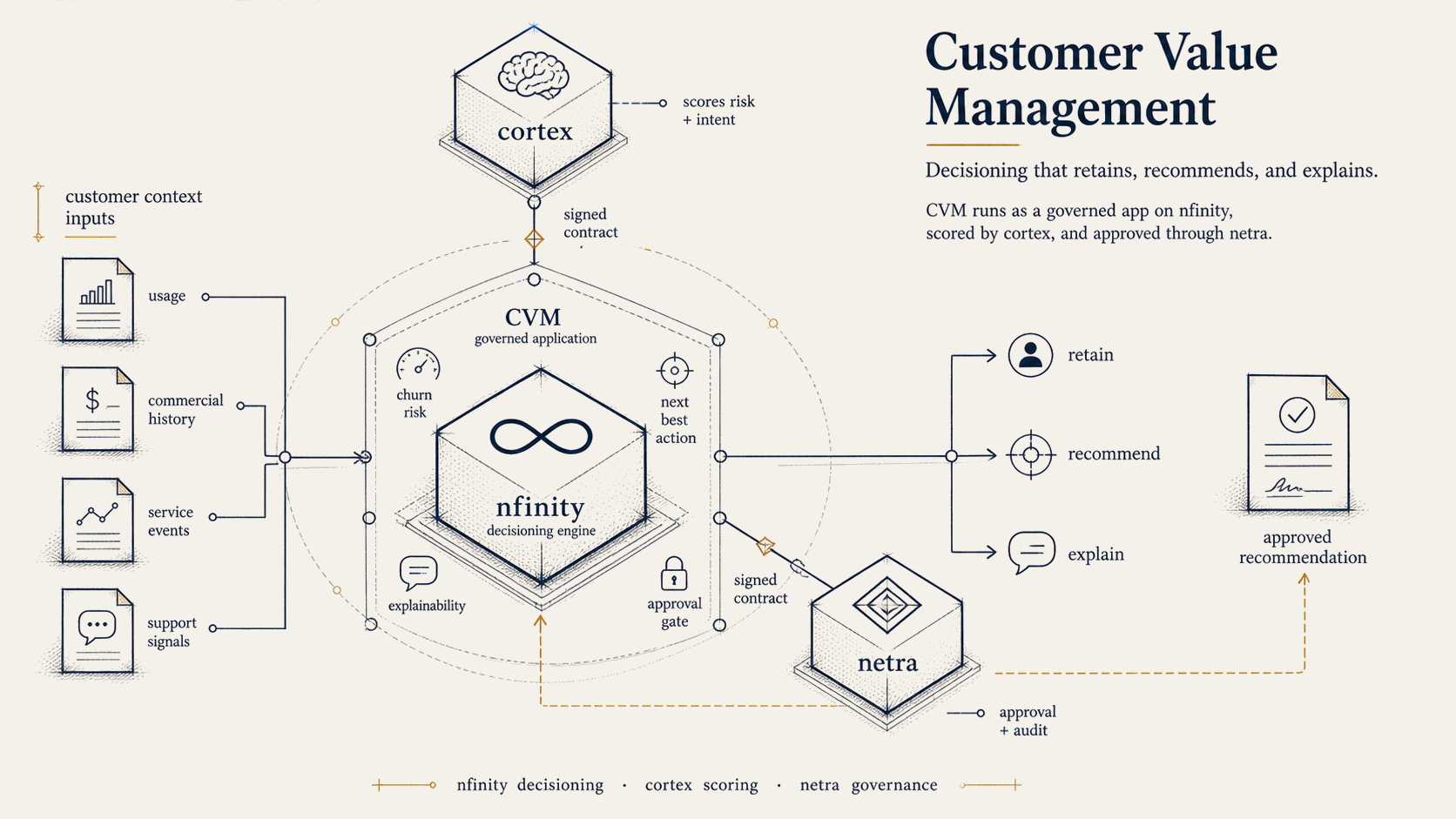
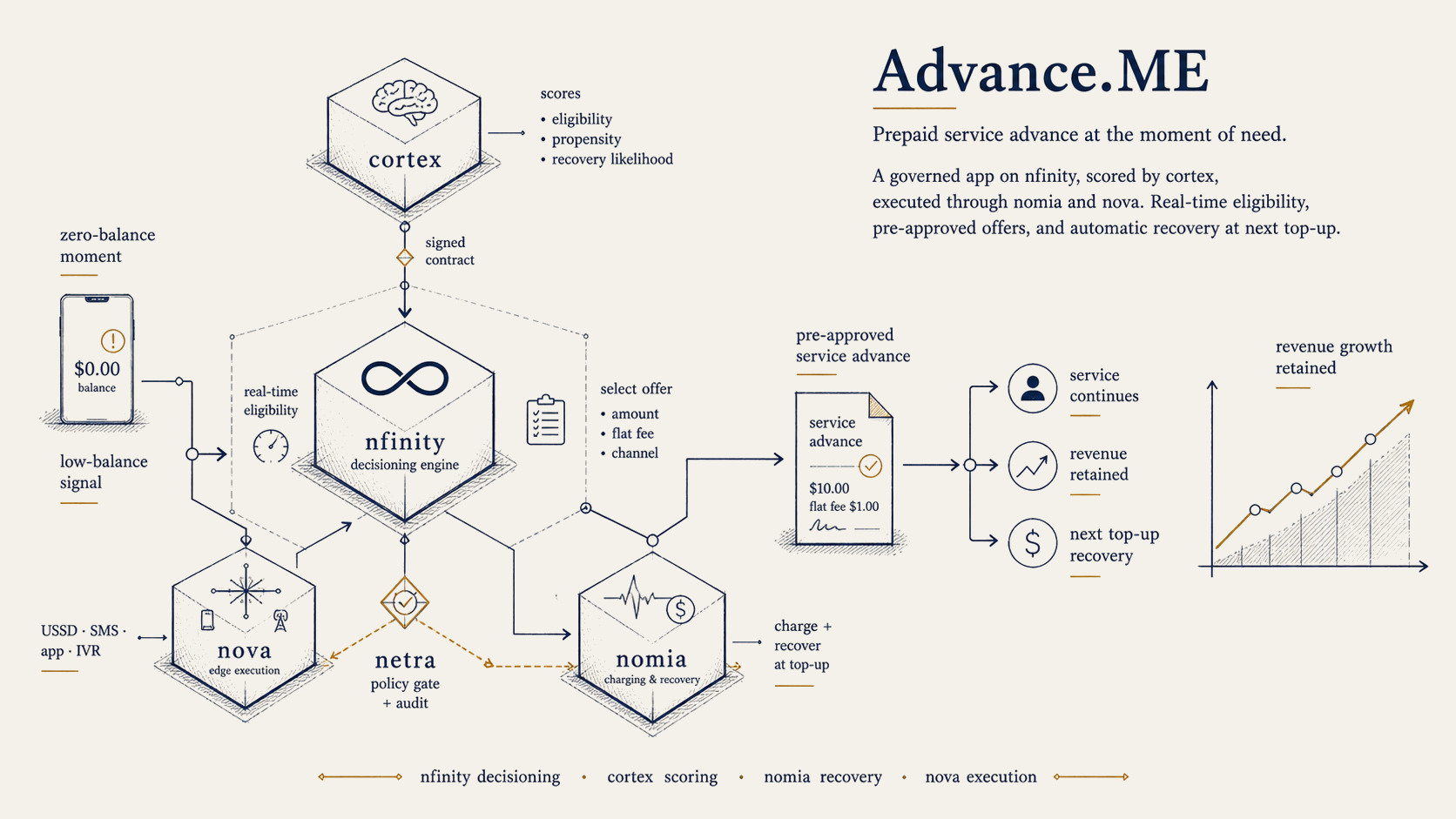
nfinity hosts the apps. cortex powers them.
The modules are the architecture. The applications are what operators actually launch. Customer Value Management and Advance.ME both run as governed applications on nfinity, with cortex providing the inference layer.
Architecture, not stack.
The seven modules of fullCIRCLE NEXT are the answer to a question most platforms refuse to ask: what should an operating system for telecom commerce actually look like in 2026?
The answer isn’t more middleware. It’s seven clean boundaries, held together by signed contracts, governed by humans, and executable from the cloud to the edge.