

Telecom networks are the invisible backbone of daily life: calls, messaging, payments, authentication, location services, emergency communications, and the platforms that power digital commerce. That makes telecom cybersecurity different from “typical IT security”—the blast radius is larger, and the trust requirement is higher.

Why telecom security is different
When customers choose a telecom provider, they are not only buying coverage—they’re entrusting a provider with:
- Identity and access: SIMs, number ownership, onboarding, and authentication flows
- Sensitive traffic and metadata: who communicated, when, from where, and how often
- Critical availability: services that must remain reliable during peak demand and national emergencies
In that context, cybersecurity becomes a business and societal requirement—not just a technical function.
What attackers target in modern telecom environments
Threats vary by market and architecture, but the most common target areas include:
- Subscriber identity & onboarding: SIM-swap, account takeover, weak KYC / identity checks
- Signaling and interconnect: abuse of SS7/Diameter, roaming exposure, misconfigurations
- Network cores and cloud platforms: exposed management interfaces, weak segmentation, insecure automation
- Digital channels and APIs: mobile apps, customer portals, partner integrations, API gateways
- IoT and enterprise connectivity: unmanaged devices, insecure endpoints, lateral movement paths
The goal is not always “downtime.” Often it’s fraud, interception, data access, or quietly establishing persistence.
The controls that matter most (a practical layered view)
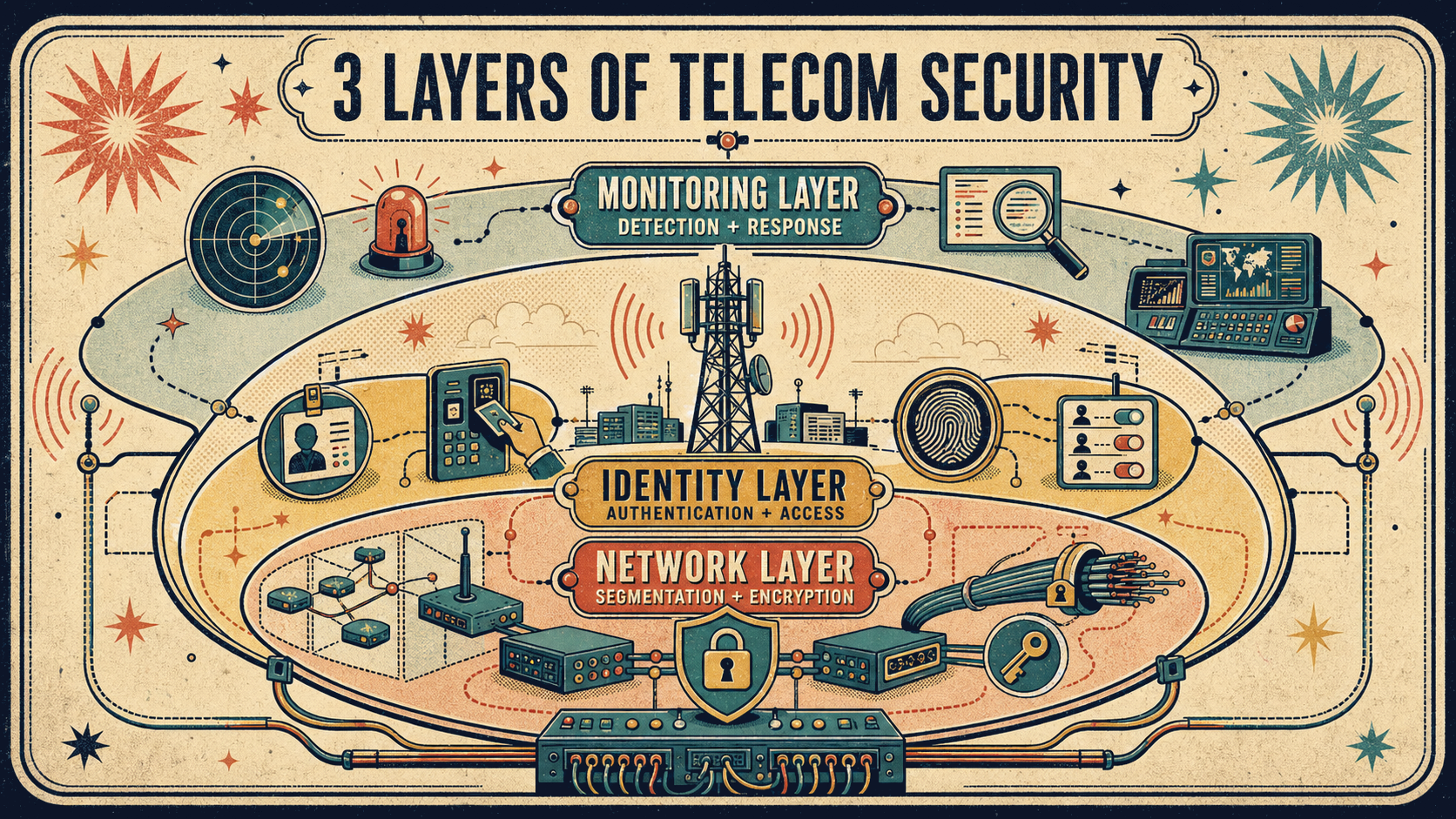
Strong telecom security is built as a set of mutually reinforcing layers:
- Network protection: segmentation, secure configurations, encryption-in-transit, hardened interfaces
- Identity and access: least privilege, strong authentication, continuous verification, privileged access management
- Monitoring and response: continuous telemetry, anomaly detection, clear playbooks, and fast containment
Privacy, compliance, and transparency (GDPR and beyond)
Security is not only about stopping attacks; it’s also about how customer data is handled. Regulations like GDPR have helped set global expectations around:
- Data minimisation and purpose limitation
- Transparency and customer rights
- Breach readiness and accountability
Treat compliance as a trust accelerator: it forces clarity, improves governance, and strengthens customer confidence.
AI as a force multiplier for telecom defense
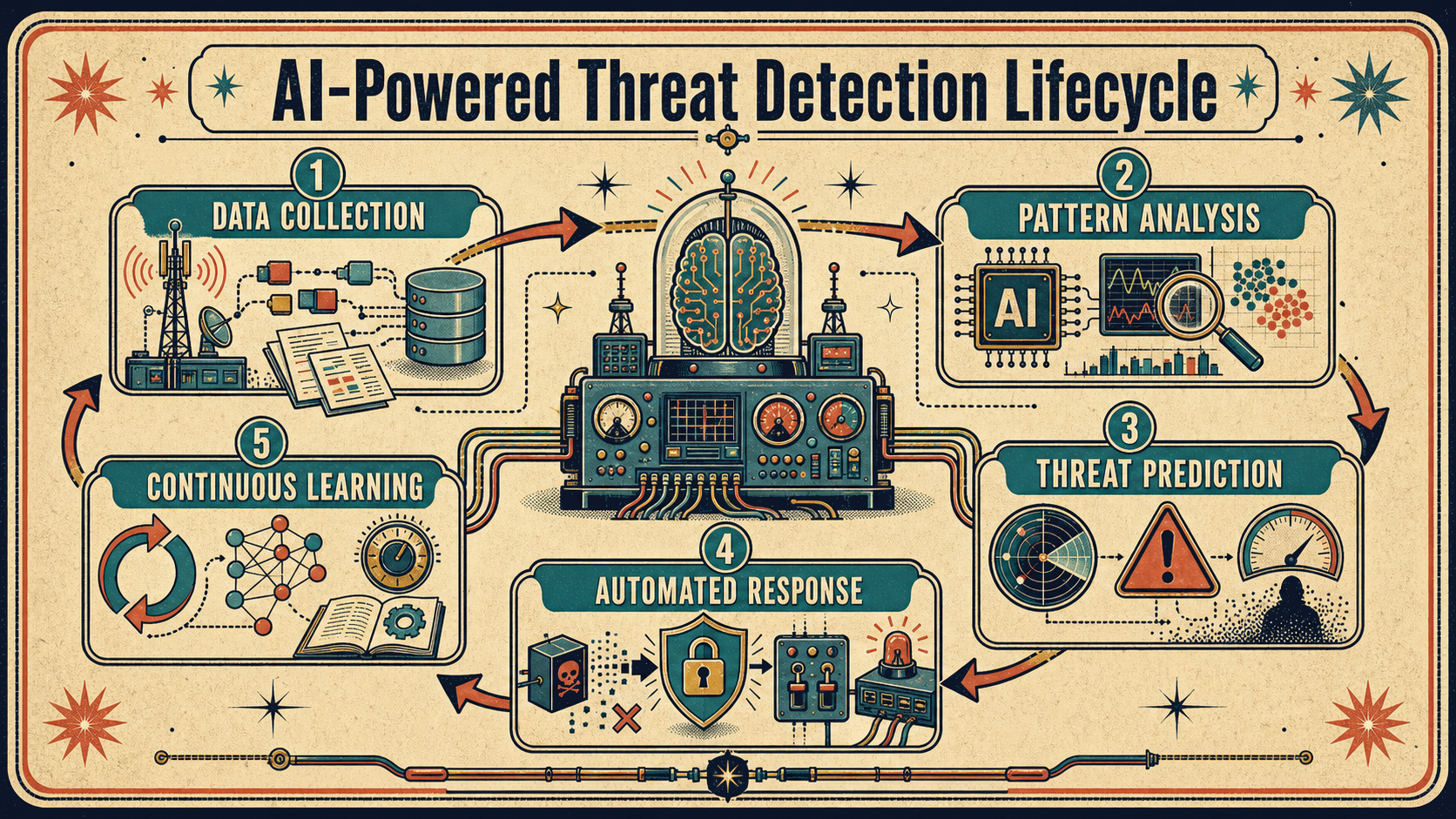
Attackers automate. Defenders need to as well. AI can help telecom environments by improving:
- Detection: finding anomalies across massive telemetry volumes and noisy environments
- Triage: prioritising events that matter, reducing alert fatigue
- Response: automating containment steps under well-defined guardrails
- Learning: continuously adapting as traffic patterns and threats change
What “good” looks like (quick checklist)
- Clear ownership: security governance aligned to network operations and product teams
- Secure-by-design delivery: threat modelling, secure configurations, and hardened automation pipelines
- Partner/vendor controls: supply chain visibility, access controls, and auditability
- Operational readiness: incident response playbooks tested with real exercises
- Continuous improvement: metrics that measure risk reduction and time-to-contain
Conclusion
TAUSPACE believes the future of connectivity is bright—only if it is secure. Cybersecurity in telecom is ultimately about enabling safe, reliable, trusted services for customers, partners, and the wider economy.
Key Takeaways
- Telecom cybersecurity is critical infrastructure security — the stakes are national, economic, and personal
- Attack surfaces are broad — identity, signaling, cores, APIs, digital channels, and IoT
- Layered controls work best — network, identity, and monitoring must reinforce each other
- AI helps defenders scale — detection, triage, and response improve with automation
- Compliance supports trust — governance and transparency reduce risk and build confidence
READY TO IMPROVE RESILIENCE AND TRUST?
Strengthen your telecom security posture
We help operators and digital brands improve protection across network, identity, and monitoring layers— with pragmatic steps that fit your operating model.
Get In Touch